Features
Part of Scenic drive gear under review: the good, the weak and the verdict
Camera gear that survives a scenic drive: dust, wind, and long days
The camera kit that survives dust, wind and long driving days, and how scenic value is managed on public land so you know what you are photographing.
What to take away
- Carry less, sealed, and within reach. Dust and inconvenience cause more missed pictures than anything else.
- Scenic value on public land is inventoried and planned for, which is why some views stay uncluttered.
- Overlooks with shade and a toilet are worth more than dramatic ones without.
- Check what an overlook does not have. Water is frequently the missing item.
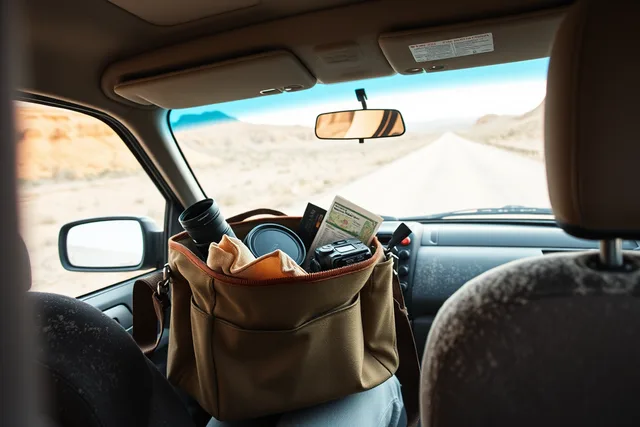
Photographing from a vehicle over several days is a durability problem. The subject is not going anywhere, but your kit is being shaken, heated and dusted for eight hours a day. The pictures you miss are usually the ones that needed the bag opened.
Why some views stay clean
Some public land views stay free of clutter. The BLM's visual resource management program protects scenic quality on public lands. It follows the Federal Land Policy and Management Act of 1976 and the National Environmental Policy Act of 1969.
It inventories scenic values, plans how to manage them, and reduces visual impacts from new projects through design.
Knowing this helps in two ways. It explains why a designated area may look different from the land beside it. It also tells you that industrial features in a view are usually there deliberately rather than by oversight.
Choose overlooks by facilities, not drama
A viewpoint you can use for two hours beats a better one you can use for twenty minutes. The BLM's page for the Anticline Overlook in Utah is a useful example.
It describes a view of the uplifted Kane Creek anticline across the Colorado River, with the potash mining facility and its solar evaporation ponds visible from the same point. It lists picnic tables, small shade shelters, interpretive signs and a pit toilet, then states that there is no water and no camping.
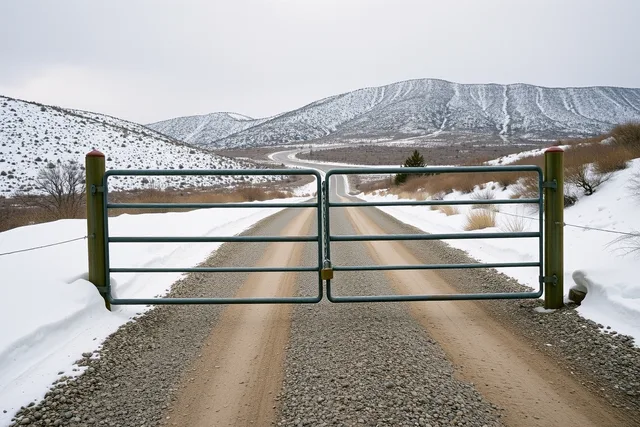
The access description matters as much: 32 miles south of Moab on the highway, west onto the paved Canyon Rims Road for eight miles, then nine miles north on a gravelled road. That is an hour and a half from town on mixed surfaces, so it is an outing rather than a stop.
The kit that survives
- One zoom on the body, and a second body if you own one, rather than frequent lens changes.
- Everything sealed in bags inside the vehicle, including the bag itself.
- A blower, a cloth and a spare battery in a pocket.
- A small tripod that lives in the footwell, not the trunk.
- Water for you, because the overlook probably has none.
Working the light on a driving day
Plan one subject for the morning and one for the evening, and treat the hours between as driving and scouting.
On gravel, allow half again as long as the distance suggests when you are trying to arrive at a particular hour. Arriving late for the light is the most common failure on a driving trip. It is a scheduling error, not a photographic one.
Where to go next
Which gear survives the conditions generally, and which fails, is covered in what holds up on back roads. For the scheduling side of photographing unpaved routes, see the backroad route field list.