Industry
Part of Fourteen kinds of road trip operator: sorted by what the rules require
Where to stay when a road trip operator runs the day: the honest picture
Choosing a base around a guided road trip: staying near the meeting point, camping at an activity site, and what changes when a trip runs for weeks.
What to take away
- Stay near the meeting point, not near the scenery. Early starts are the whole reason.
- Where the activity has its own campground, that is usually the better base.
- Long stays are a different product with different rules, even in the commercial world.
- Confirm the meeting point on a map before you book anything.
The night before a guided day is a logistics problem rather than a hospitality one. Where you sleep determines whether you arrive at the meeting point rested or having driven ninety minutes in the dark.
Stay near the meeting point
Ask the operator for the exact meeting location and the time, then find a bed within thirty minutes of it. A more attractive town an hour away costs you the start of the day, and on back roads the early hours are the best ones.
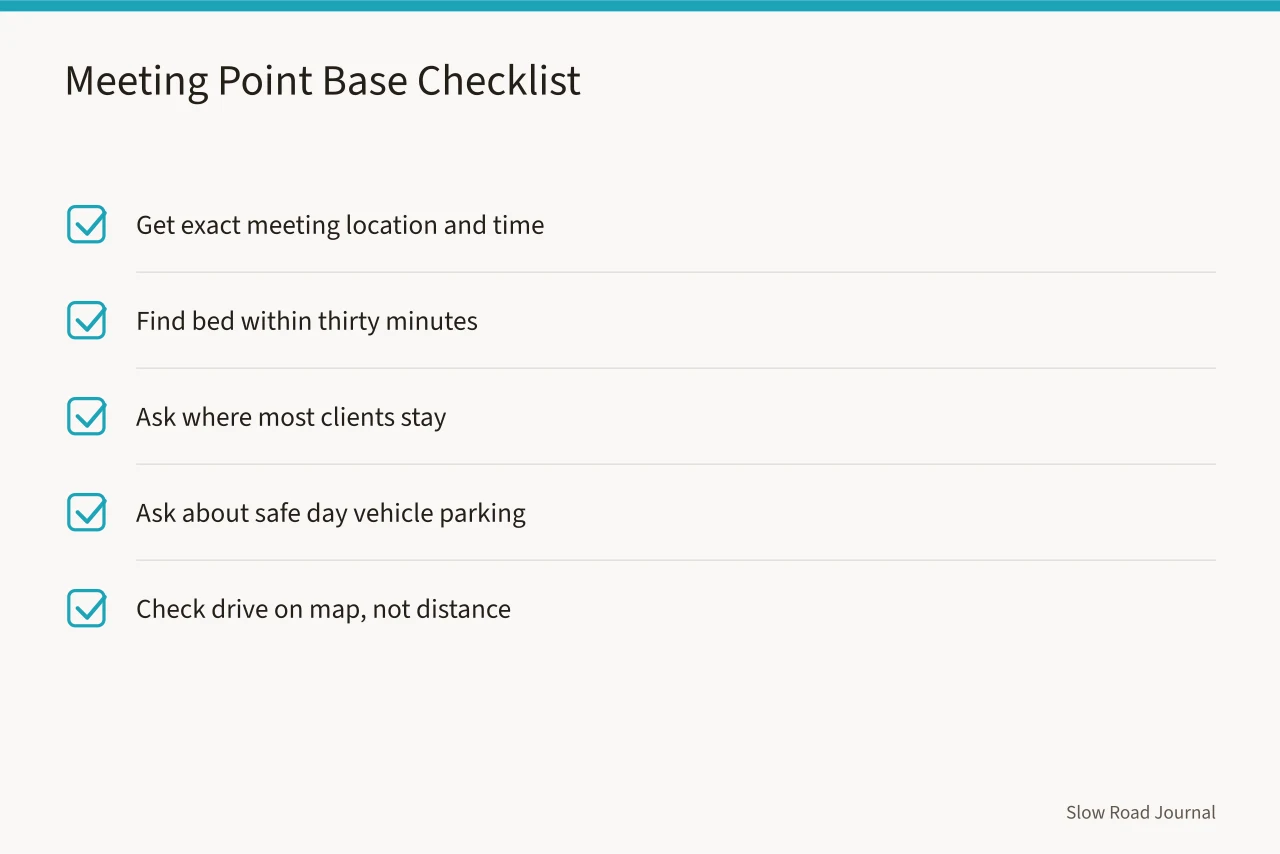
Ask two more questions while you have them. Where do most clients stay, and is there anywhere to leave a vehicle safely for the day. Operators answer both instantly because everyone asks.
Check the drive on a map rather than trusting a distance. Thirty minutes on pavement and thirty minutes on gravel in the dark are not the same journey, and a meeting time of half past six means leaving in conditions you have not seen.
Camp where the activity is
Many activity areas include campgrounds, so staying inside the area removes the transfer entirely.
The BLM page for Cottonwood Canyon Campground in Utah describes one of two campgrounds in the New Joe's bouldering area. It sits west of the San Rafael Swell and east of the Manti La Sal National Forest. The page notes Joe's Valley bouldering area has more than 188 bouldering sites and 9.7 miles of trails.
For anyone booked with a climbing or bouldering guide there, that is the obvious base. The same logic applies to river outfitters, dune areas and trail systems: if the site has a campground, start from it.
Long trips are a different product
For trips lasting weeks instead of days, the lodging question changes. The General Services Administration's long term lodging program describes a contract arrangement. It gives federal travelers access to vendors who supply fully furnished apartments and condominiums for stays of thirty nights or more.
That program differs from the hotel rate program used for shorter temporary duty travel.
You cannot book that as a private traveler, but the distinction is a useful one to borrow. Beyond about a month, furnished residential accommodation is usually cheaper and more comfortable than a series of rooms, and it gives you a place to leave equipment between trips.
Matching base to trip
| Trip | Best base |
|---|---|
| Single guided day, early start | Within thirty minutes of the meeting point |
| Activity with its own campground | Inside the recreation area |
| Multi day guided trip | Wherever the operator stages, night before and night after |
| Several weeks in one region | Furnished monthly accommodation |
Where to go next
Which kind of operator you are dealing with changes all of this, and the fourteen kinds of road trip operator sets out what each one supplies. For choosing a base without an operator involved, see where to stay near scenic drives.
Common questions
Should I book the night after the trip as well? For any long or difficult day, yes. Driving three hours after a guided day on rough roads is how people get hurt.
Do operators arrange accommodation? Some do, and some have arrangements with local properties. Ask rather than assuming either way.
Is camping the night before a good idea? If the site is close and you sleep well outdoors, yes. If the start is very early, a room may be worth the money.
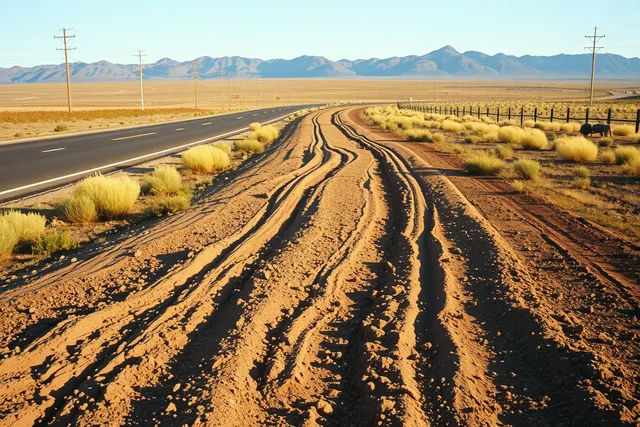
What if the meeting point is remote? Then confirm the drive time on a map, in the surface conditions expected, and add margin. Meeting points in the desert are further apart than they look.