Rules
Small-town speed traps in the Deep South, what AAA and state DOTs say
Small-town road trips in the Deep South run past local speed traps, fine schedules and state DOT rules. Here is what AAA and the states say.
What to take away
- Small-town road trips in the Deep South cross a patchwork of local speed limits, and enforcement patterns differ sharply between Georgia, Alabama, Mississippi and Louisiana.
- A speed trap is usually a legal limit dropped fast at a town edge, not an illegal one, so the posted sign is what matters in court.
- Fines are set by local ordinance or a state schedule, and the amount on the ticket is rarely the full cost once court fees are added.
- AAA guidance is to pull over safely, stay in the car, keep hands visible and never argue the case on the shoulder.
- State DOTs control speed limits on state routes and set work zone rules, but towns control the streets they own.
- Keep the citation, the location and photos of the sign; contesting is possible but usually means returning to that county.
What slow travelers mean by a small-town speed trap
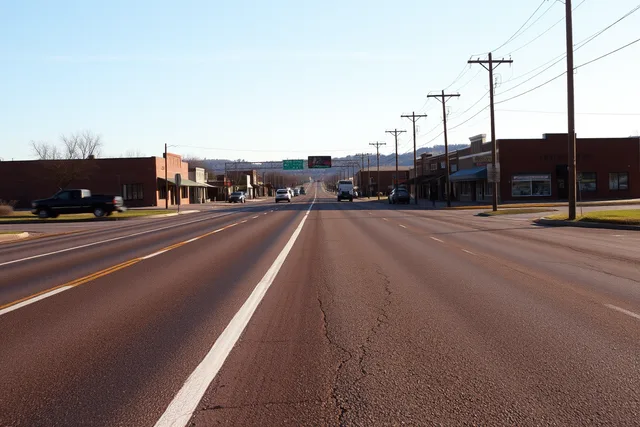
A speed trap is a stretch where the limit drops faster than a driver expects and enforcement waits at the bottom of the drop. In the Deep South the classic shape is a state route at 55 mph that becomes 45, then 35, within a few hundred yards of the first houses.
The limits themselves are legal. A town can set a lower limit on the streets it owns, and a state DOT can set one on a route it controls. What makes it a trap is the spacing, not the number.
Slow travelers feel this more than interstate drivers. A route built around small town stops means entering and leaving town limits several times a day, and each boundary is a new set of rules.
Georgia, Alabama, Mississippi and Louisiana all allow towns to set limits below the state default on municipal streets. The signs are supposed to be posted at the boundary, and most are. Missing or obscured signs are the main defense when a stop is contested.
Speed enforcement also funds small departments. A town of 2,000 with a four-officer force may write most of its tickets on one half-mile of highway. That is not corruption by itself, but it explains where the cruiser sits.
The Federal Highway Administration publishes the highway statistics that frame this, including vehicle miles traveled and fatality rates by state. Those numbers are the backdrop for why states push enforcement on rural routes. The agency's highway statistics are worth a look before a long Southern drive.
Enforcement patterns in Georgia, Alabama, Mississippi and Louisiana
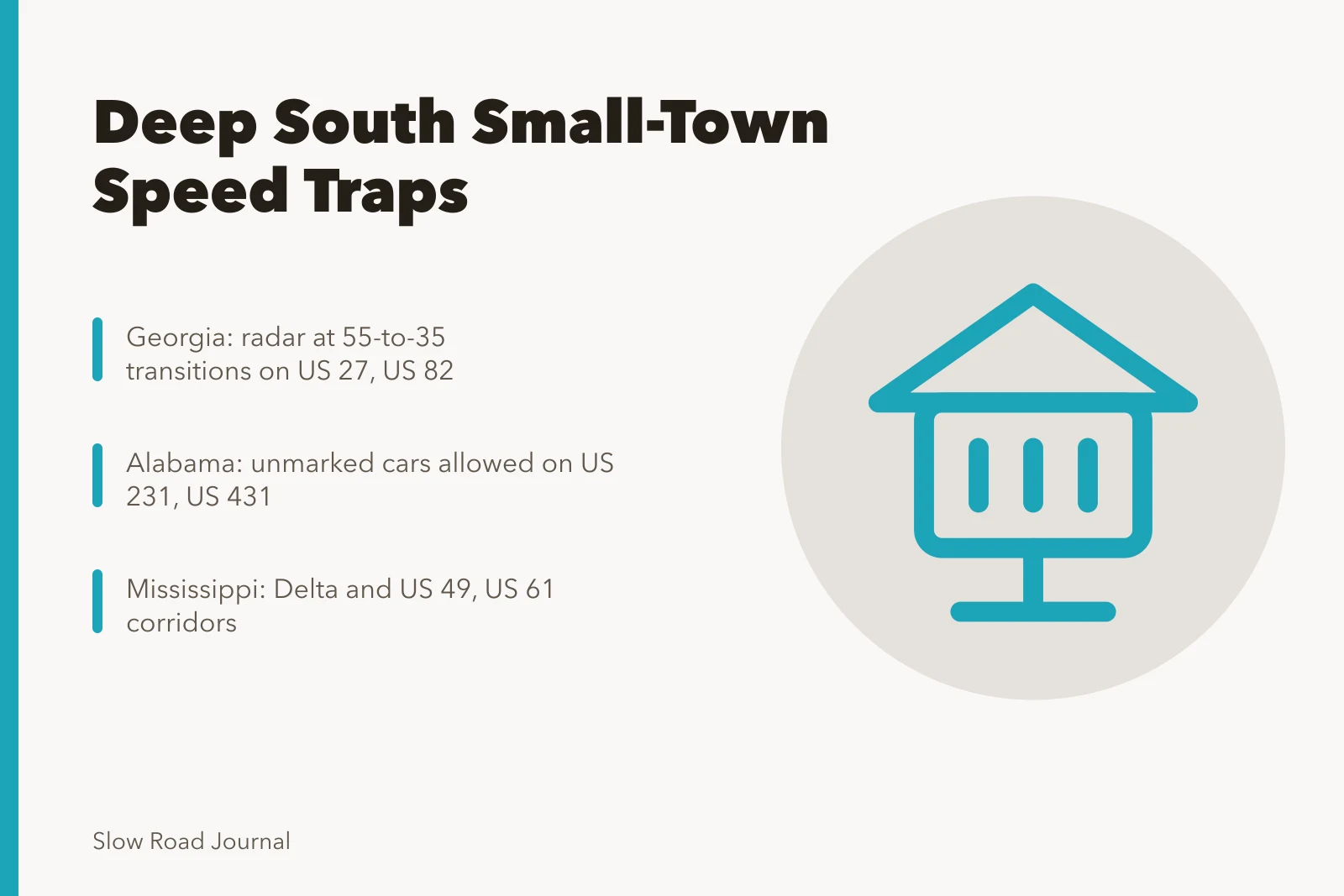
Georgia towns on US 27, US 82 and the state routes through the Piedmont run heavy radar enforcement at the 55-to-35 transitions. Georgia State Patrol works the same corridors, so a town stop and a state stop are both possible in one afternoon.
Alabama enforcement clusters on US 231, US 431 and the routes through the Black Belt. Some towns use unmarked cars, which Alabama law permits. The stop itself is usually routine and short.
Mississippi leans on the Delta and the US 49 and US 61 corridors. Small departments there often run one radar unit, so enforcement is concentrated in short windows rather than spread across a shift.
Louisiana is different because parish and town police both operate. On US 190 and LA 1 you can be stopped by a town officer, a parish deputy or Louisiana State Police, sometimes within the same twenty miles.
Across all four states, enforcement rises at the start and end of the month and around festivals and football weekends. Locals know the pattern. Visitors do not.
A courthouse square is often the giveaway that a town has a real center and real enforcement. The courthouse square explains what most visitors miss, and the square at the crossroads usually means the limit drops before you see it.
Fine schedules and how local ordinances set them
Fines in these states come from two places: a state schedule for state-law violations, and a local ordinance for municipal violations. Most small-town tickets are written under the local ordinance.
A local ordinance sets a range, and a judge or a preset schedule sets the amount. The number on the ticket is the fine, not the total. Court costs, fees and sometimes a local surcharge are added at payment.
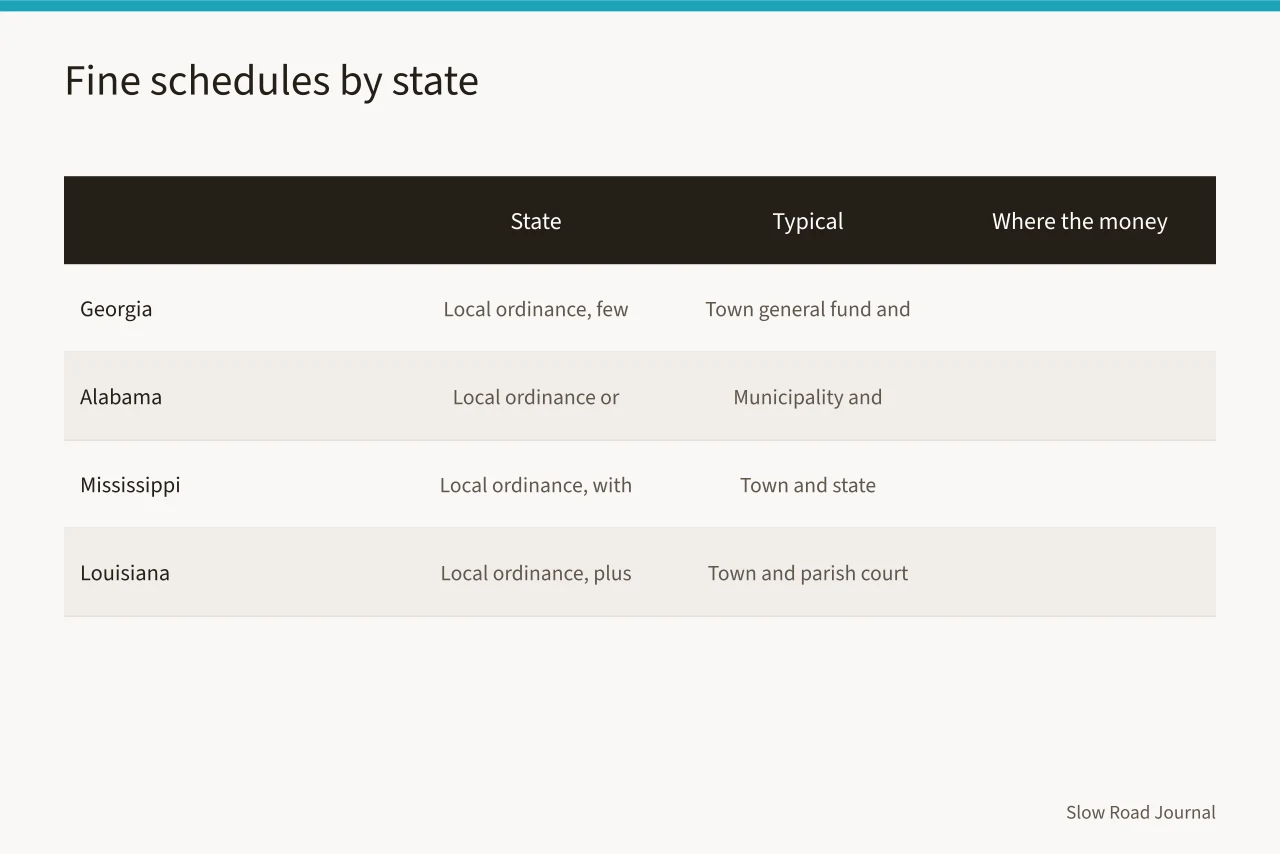
| State | Typical first-offense range for a minor speed violation | Where the money goes |
|---|---|---|
| Georgia | Set by local ordinance, commonly a few hundred dollars with costs | Town general fund and state fees |
| Alabama | Set by local ordinance or state schedule, plus court costs | Municipality and county court |
| Mississippi | Set by local ordinance, with a state assessment added | Town and state assessments |
| Louisiana | Set by local ordinance, plus parish court costs | Town and parish court |
Those ranges move. A work zone or a school zone can double or triple the amount, and some towns add a separate fee for the zone. Signs must be posted for the enhanced fine to hold.
Payment is usually online or by mail, and paying is an admission in most cases. If you plan to contest, do not pay first. Ask the court clerk for the ordinance number and the exact fee breakdown.
Some towns will reduce a ticket if you appear and the officer does not. That is a scheduling fact, not a legal right. It varies by court date and by how far the officer has to travel.
AAA guidance on dealing with a stop out of state
AAA guidance for a stop away from home is consistent: pull over as soon as it is safe, stay in the vehicle, keep both hands on the wheel, and let the officer lead the conversation. Reach for the glovebox only after you say you are reaching for it.
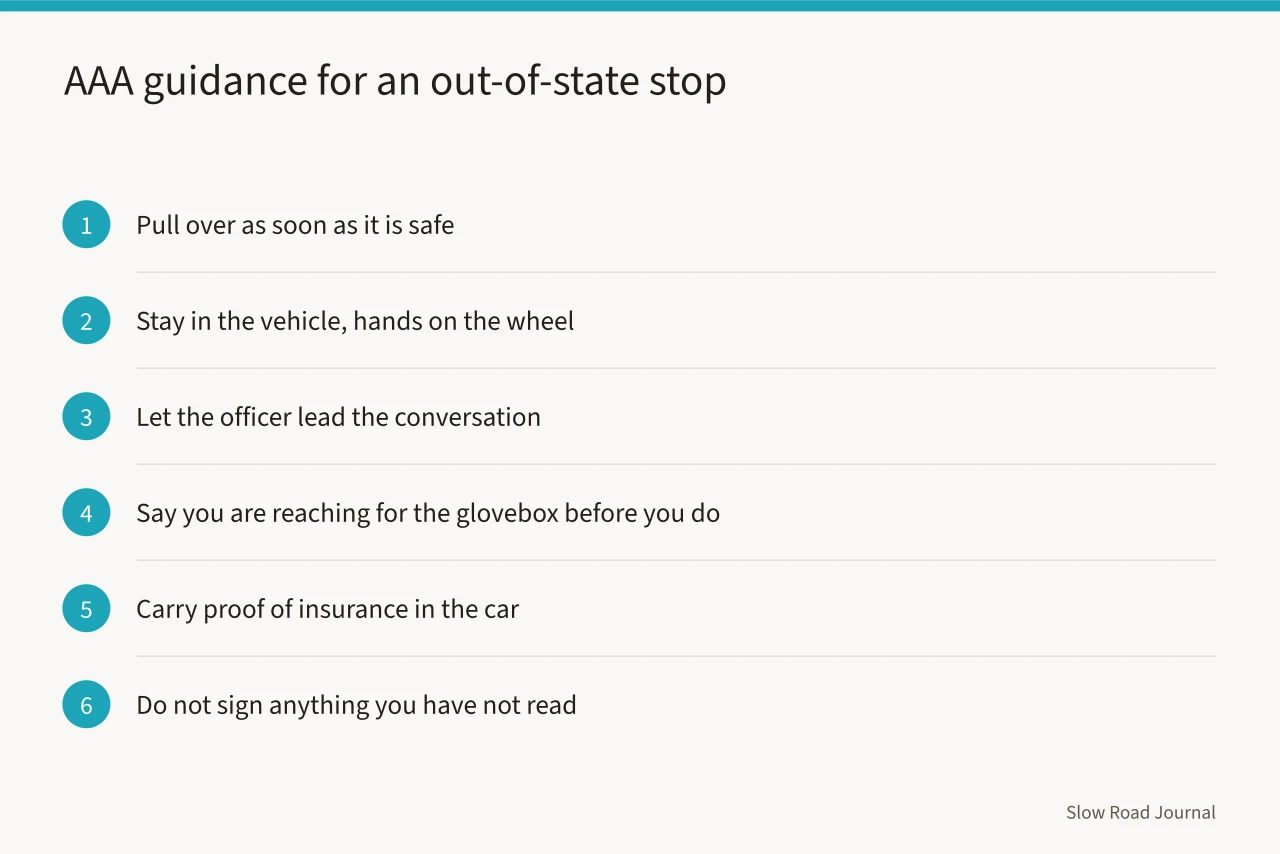
AAA also advises carrying proof of insurance in the car and knowing whether your state's coverage meets the minimums where you are stopped. Requirements differ across Georgia, Alabama, Mississippi and Louisiana.
If you are from out of state, expect to be asked for a local address. A hotel or campground address is fine. Give it plainly and do not offer a story.
AAA's roadside and travel services can help after the stop with towing, a locksmith or a route change, but they do not represent you in court. For that you need a local attorney or you appear yourself.
One practical point from AAA: do not sign anything you have not read. A signature on a citation is usually a promise to appear, not an admission. Ask which it is before you sign.
The Natchez Trace Parkway is the Deep South route where these rules matter most, because it is federal land with its own enforcement. The parkway's frequently asked questions cover speed, stops and commercial traffic before you commit to the route.
State DOT rules that limit or permit local enforcement
State DOTs set speed limits on state-maintained routes and set the rules for work zones, school zones and variable limits. Towns set limits on the streets they own. The boundary between the two is where most disputes start.
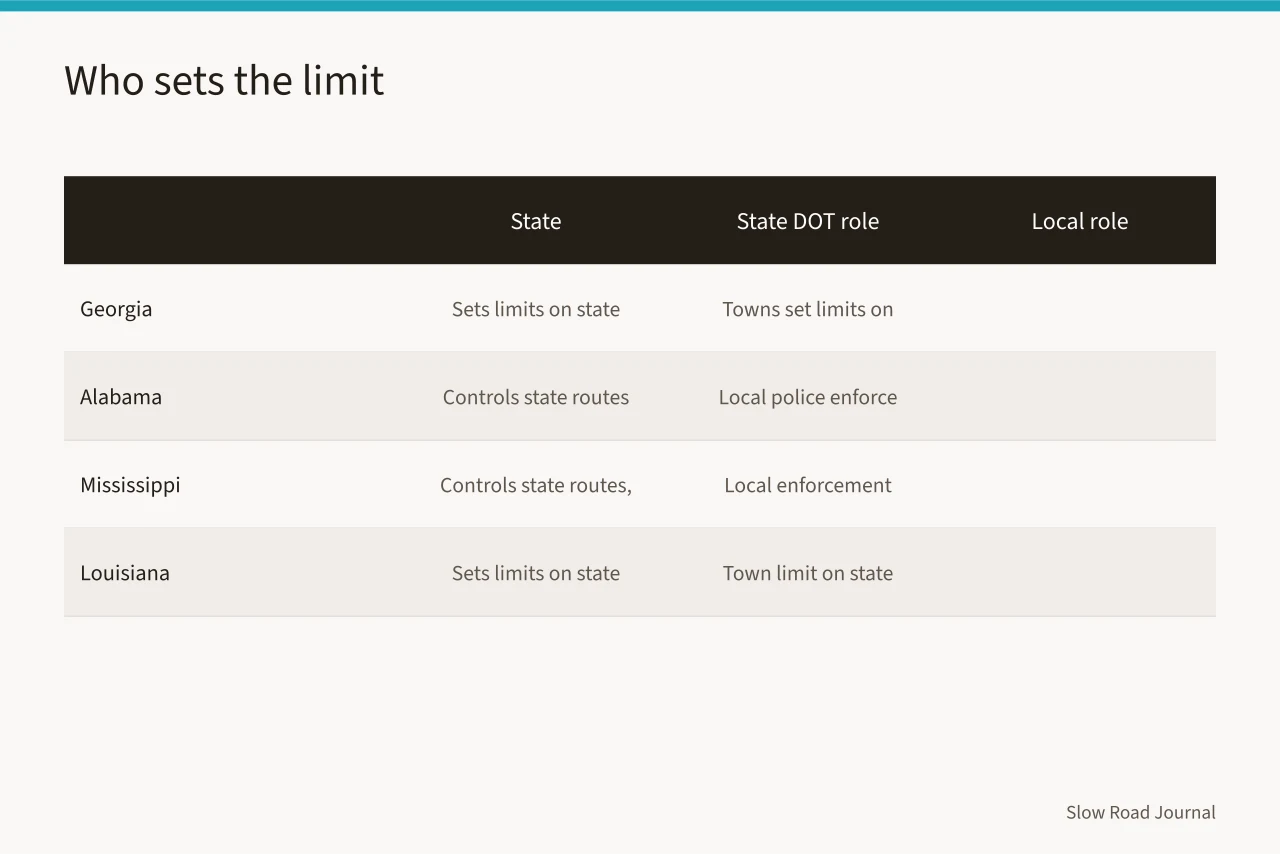
Georgia DOT sets limits on state routes and requires an engineering study before a town lowers one on a state route through town. That study is public record and can be requested.
Alabama DOT controls state routes and sets work zone limits, and local police enforce them under state law. Mississippi DOT does the same, and its manual governs how signs are placed and spaced.
Louisiana DOTD sets limits on state highways and works with parishes on local roads. In Louisiana, a town limit on a state route usually requires DOTD approval, which is a useful fact if a sign looks wrong.
Federal law sits underneath all of it. The U.S. Code highway provisions give states the authority to regulate speed and safety on their roads, which is why there is no single national speed rule. The relevant U.S. Code Title 23 text is public and short enough to skim.
The federal regulations that carry those provisions are in Title 23 of the CFR, which covers highway safety programs and the conditions states accept when they take federal highway money.
For a slow route through the region, the parkway is the cleanest example of federal rules meeting local roads. The basic information page for the Natchez Trace Parkway lays out the speed limit, the no-commercial-traffic rule and where you can pull off.
Legal quirks worth knowing before a small-town road trips route
A few quirks catch visitors in these four states more than any others.
First, some towns use a mayor's court or a municipal court with no prosecutor present. The officer presents the case, and the judge decides. That is legal in Georgia, Alabama and Mississippi, and it changes how you prepare.
Second, a citation may require an appearance even if you plan to pay. Read the bottom of the ticket. Missing a court date is a separate charge and a much larger problem than the original fine.
Third, radar and lidar calibration records are discoverable in most of these states. If you contest, request them. A lapsed calibration certificate is a common reason a ticket is dismissed.
Fourth, school and work zone fines can be enhanced, but the zone must be properly signed and, in work zones, usually active. A sign left up on a Sunday is not always enough.
Fifth, speeding in a construction zone with workers present carries the steepest penalties in all four states. Slow down early and stay slow until you see the end sign.
Reading a town before you enter it helps. The civic buildings that separate a real small town from a stop sign are usually visible from the highway, and they tell you where the limit will drop.
Documenting the stop: what to keep and what to contest
What you keep decides what you can contest. Do this calmly, after the stop, not during it.
- Photograph the citation front and back the same day, while the officer's handwriting is still legible to you.
- Photograph the speed limit signs on both sides of the stretch, including the sign you passed and the next one.
- Note the time, weather, traffic and where the officer was parked, with a photo of the location if it is safe to stop.
- Save the court date, the ordinance number and the clerk's phone number from the citation.
- Request the calibration record and the officer's training record if you decide to contest.
Use this checklist before you decide whether to pay or appear.
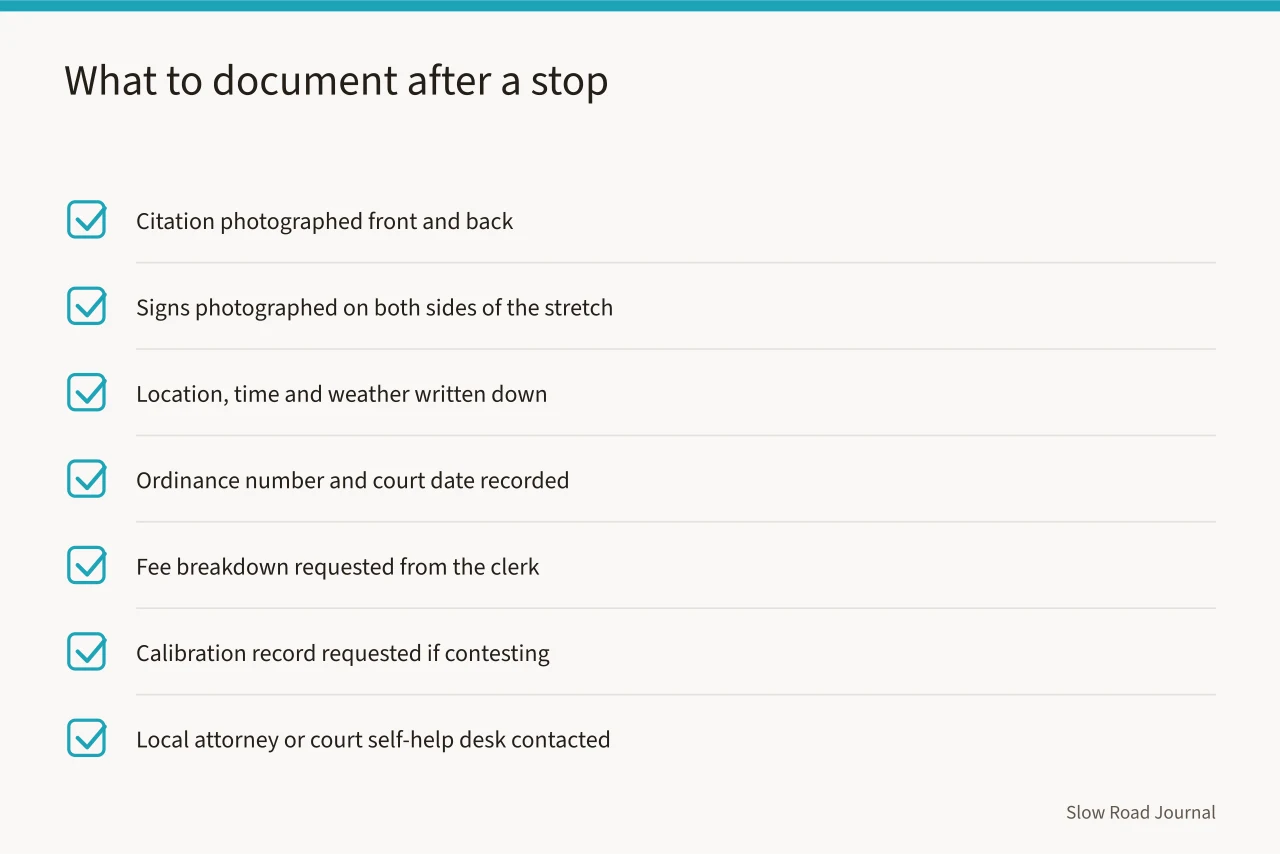
- Citation photographed front and back
- Signs photographed on both sides of the stretch
- Location, time and weather written down
- Ordinance number and court date recorded
- Fee breakdown requested from the clerk
- Calibration record requested if contesting
- Local attorney or court self-help desk contacted
Contesting usually means returning to that county on a weekday. Add the drive, the lost day and the court costs before you decide. For a small fine, paying is often cheaper than winning.
If the stop was on a normal route through town, treat it as a cost of the trip and move on. If the sign was missing, the zone was not active or the limit was set without the required study, you have something to contest.
Local businesses along these routes often know which stretches get enforced and when. A small town's own history is its best marketing tool for travelers, and the same people who run the museum or the cafe will tell you where the cruiser sits.
Before you book a night in one of these towns, ask about seasonal hours and staffing, because a closed courthouse on a Friday can turn a quick payment into a second trip.
Common questions
Is a small-town speed trap illegal? No, if the limit is properly posted and set by the body that owns the road. The trap is the sudden drop and the waiting cruiser, not the law itself.
Can a town lower the limit on a state highway? In Georgia, Alabama, Mississippi and Louisiana, usually only with state DOT approval and often an engineering study. Ask the clerk for the ordinance and the study.
Does paying a ticket count as an admission? In most of these courts, yes. If you intend to contest, do not pay first. Ask the clerk what a payment means in that court.
Will an out-of-state ticket follow me home? Georgia, Alabama, Mississippi and Louisiana are part of the interstate driver record compact, so a conviction can appear on your home state record. A non-moving dismissal usually does not.
What does AAA recommend at the stop? Pull over safely, stay in the car, keep hands visible, be polite and do not argue the case on the shoulder. Save the argument for court.
Do I need a lawyer to contest a small-town ticket? Not always. Many people appear alone in municipal court. A local attorney helps most when the fine is large or the charge carries points.