Industry
Part of Scenic drive planning: settle surface, access, and legality first
Where to stay near the best scenic drives: the parts worth your time
Choosing a base for a scenic drive: developed campgrounds, dispersed sites, stay limits and the questions a campground page answers before you arrive.
What to take away
- Where to stay near the best scenic drives comes down to three kinds of night: developed campground, dispersed site, and a room in town.
- Stay limits are real and enforced, and they differ by office.
- A campground page tells you the fee, the season and the facilities. Read all three before you commit.
- First come first served means arriving early, not arriving hopeful.
- Bases worth checking by driveMount Pisgah on the Blue Ridge Parkway, Apgar near Going-to-the-Sun Road, Soda Butte near the Beartooth Highway, Calf Creek on Utah Route 12, and Jeff Busby on the Natchez Trace Parkway.
A campground on the road buys early light and quiet mornings. A motel in town buys a shower and a restaurant. Both work. Choosing badly costs you either the morning or the evening.
The three options, honestly
Developed campgrounds give you a table, a fire ring and usually a toilet, for a fee. Dispersed camping is free on most public land but supplies nothing. A room in the nearest town costs the most and removes every logistical question at once.
Camping options compared
Developed campground
- Cost
- Fee
- Amenities
- Table, fire ring, toilet
- Stay limit
- About 14 days
- Payment
- Within 30 minutes
Dispersed camping
- Cost
- Free
- Amenities
- Nothing supplied
- Stay limit
- About 14 days
- Payment
- Not applicable
Town room
- Cost
- Most
- Amenities
- All questions removed
- Stay limit
- None noted
- Payment
- Not applicable
The BLM's overview of camping on public lands sets out the rules for both camping options. Fees and stay limits differ by campground, and many areas cap stays at about fourteen days within a twenty eight day period.
Payment is due within thirty minutes of occupying a site. A site counts as rented only when the fee is paid, the stub is displayed and the site is occupied. Some campgrounds open only seasonally, so confirm operating dates before you travel.
For dispersed camping the same page is clear that vehicles must stay on designated roads and trails unless the area is specifically designated for off road use. After reaching a stay limit, visitors are generally expected to move a substantial distance away.
What a campground page actually tells you
A single site page usually answers more questions than a booking site would. The BLM's entry for Atlantic City Campground in Wyoming is a good example. It lists eighteen campsites with fire rings, garbage collection, water when weather permits, picnic tables and vault toilets. The site takes large recreational vehicles and is accessible.
Atlantic City Campground at a glance
- 18campsites
- $20per night
- June-Octobertypical use season
- First come first servedno reservations
The page notes seasonal closures and a typical use season of June through October. The fee is twenty dollars per night, with a reduced rate for senior and access pass holders. Sites are first come first served with no reservations, and this is bear country.
Everything you need to decide is there. Note in particular the phrase about water when weather permits. That is a warning to carry your own.
Other drive campground pages follow the same pattern. The National Park Service lists Mount Pisgah Campground at milepost 408.6 on the Blue Ridge Parkway, open May through October, with Parkway fees typically $25 to $30 per night. The campground sits on the Parkway at that milepost, so the drive starts at the entrance.
Apgar Campground has 194 sites, about two miles from the west entrance to Going-to-the-Sun Road in Glacier National Park. Glacier sites run about $25 per night. Recreation.gov opens many campgrounds six months out, so a July night means booking in January. Check the park page for the season opening date.
Soda Butte Campground sits on the Beartooth Highway about three miles east of Cooke City, the base at the Yellowstone end of the route. It is a small first-come U.S. Forest Service site with vault toilets and a seasonal opening.
Calf Creek Recreation Area on Utah Route 12 has 13 sites and charges about $15 per night, first come, first served. It sits about 15 miles east of Escalante. The drive between Boulder and Escalante is the reason to base there.
On the Natchez Trace Parkway, the National Park Service lists Jeff Busby, Rocky Springs and Meriwether Lewis campgrounds. All three are free, with no hookups. Jeff Busby sits on the Parkway at milepost 193.1, so the drive passes the campground.
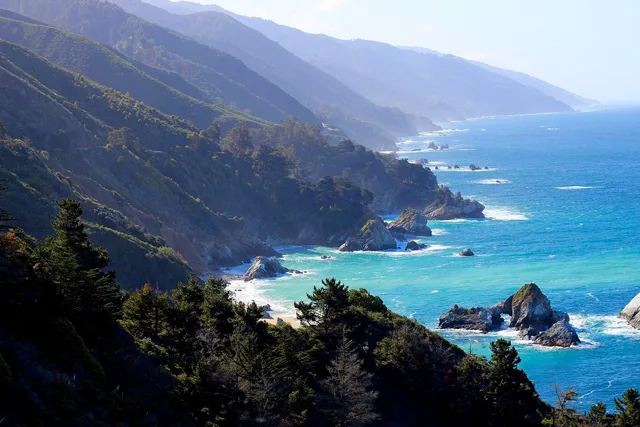
Kirk Creek Campground in Los Padres National Forest sits above Highway 1 in Big Sur. It takes reservations and costs about $45 per night. The entrance opens directly onto Highway 1, so the coast route passes the campground.
Some of these campgrounds close for the winter. Mount Pisgah and Atlantic City are seasonal, running May through October and June through October. When a listed campground is closed, the public land around it often still allows dispersed camping unless it is posted. Motels in the nearest town stay open year round.
Matching the night to the route
- Long unpaved route with early start neededcamp on the road, arrive by mid afternoon. On the Beartooth Highway, Soda Butte is the close base.
- Short paved loop with a town at one endtake the room and drive the loop twice. On Utah Route 12, Boulder and Escalante have motels.
- Hot low desert in shoulder seasoncamp, because the nights are the good part. On the Natchez Trace, free campgrounds make this easy.
- Wet forecast on graveltake the room and keep the option of leaving. On the Blue Ridge Parkway, a room in Asheville or Roanoke works.
Sizing the driving day
A scenic drive with stops fills a day. Budget about two hours of driving and three hours of stopping, and let the base decide how early you start. The overnight only works if the driving day is sized correctly, which is the argument in the two day itinerary.
If you want to understand who keeps these small places open, how local businesses support these routes is the companion piece.